Join the AI Workshop and learn to build real-world apps with AI. A hands-on, practical program to level up your skills.
This tutorial belongs to the Swift series
In Swift, numbers have 2 main types: Int and Double.
An Int is a number without decimal point.
A Double is a number with decimal point.
Both use 64 bits on modern 64-bit computers, and 32 bits on 32-bit platforms.
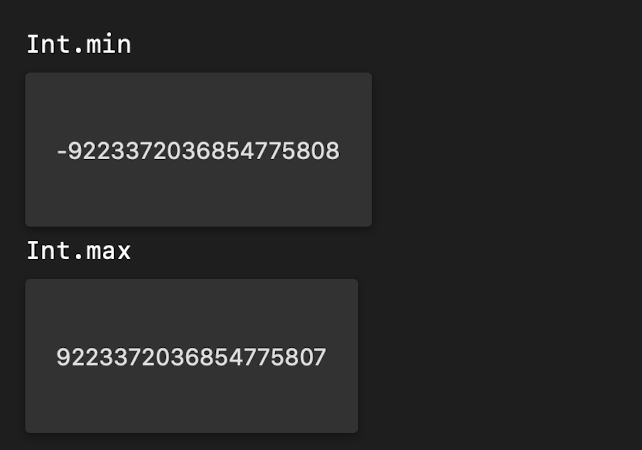
The range of values they can store depends on the platform used, and can be retrieved using the min and max properties of each type:
Then, in addition to Int and Double, we have lots of other numeric types, mostly used to interact with APIs built in the past and that needed to interact with C or Objective-C, and you must be aware that we have them:
-
Int8is an integer with 8 bits -
Int16is an integer with 16 bits -
Int32is an integer with 32 bits -
Int64is an integer with 64 bits -
UInt8is an unsigned integer with 8 bits -
UInt16is an unsigned integer with 16 bits -
UInt32is an unsigned integer with 32 bits -
UInt64is an unsigned integer with 64 bits
UInt is like Int, but unsigned, and it ranges from 0 to Int.max * 2.
Float is a decimal number with 32 bits.
Then using Cocoa APIs you might use other numeric types like CLong, CGFloat, and more.
You will always use Int or Double in your code, and use those specific types for particular cases.
Any of those types can be converted to Int or Double by passing the value to Double() or Int():
let age : UInt8 = 3
let intAge = Int(age)
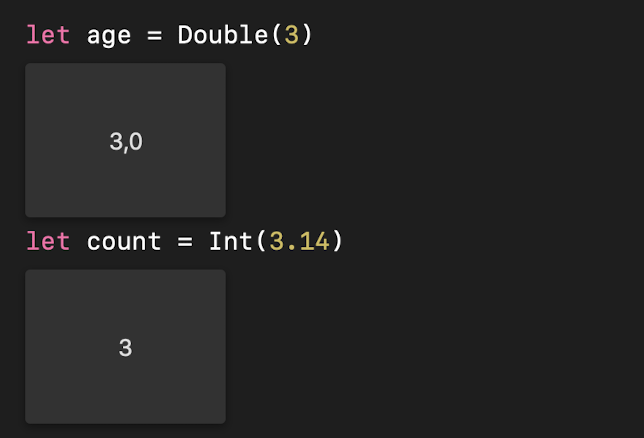
You can also convert a number from Double to Int:
let age = Double(3)
let count = Int(3.14)