Join the AI Workshop and learn to build real-world apps with AI. A hands-on, practical program to level up your skills.
I wanted to show or hide a little panel based on the mouse hover status.
When I hovered a link, the panel would show up.
Then I could enter this panel with the mouse, and when I moved the mouse away, the panel would hide.
Like the Twitter profile that shows when you move the mouse upon the name of a person:
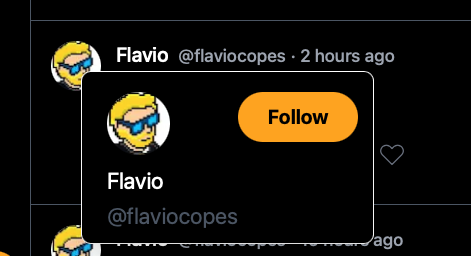
On the <a> element that triggered the panel to show up, I added the event onMouseEnter:
<a
  onMouseEnter={() => {
    setShowCard(true)
  }}
>flavio</a>
so the panel would show when I hovered it with the mouse, because its visibility depended on the showCard state variable I had set before:
const [showCard, setShowCard] = useState(false)Then I had the ProfileCard component, but I couldn’t just do:
<ProfileCard
onMouseEnter={() => {
  setShowCard(true)
}}
onMouseLeave={() => {
  setShowCard(false)
}}
/>
because it didn’t work. ProfileCard is not a DOM element, so it didn’t get the events fired to respond to.
What I had to do was to pass onMouseEnter and onMouseLeave as props to the ProfileCard component, then identify the correct DOM element inside it that could receive those events, and attach the event handler there. In this case, I used the container div:
const ProfileCard = ({
  onMouseEnter,
  onMouseLeave
}) => (
  <div
    onMouseEnter={onMouseEnter}
    onMouseLeave={onMouseLeave}>
      ...
Now leaving the panel would hide it.