Join the AI Workshop and learn to build real-world apps with AI. A hands-on, practical program to level up your skills.
A Light Emitting Diode, also called LED, is one of the first electronic components you use in your experiments, because it’s simple to use and due to its nature it’s perfect to explore all the concepts we’re learning.
There are various kinds of LEDs, for various applications and uses. Some are really tiny, for use in grids. Some are high-power, like the ones used for automotive lights.
The ones we’ll talk about here are those commonly used for prototyping: the 5mm LEDs.
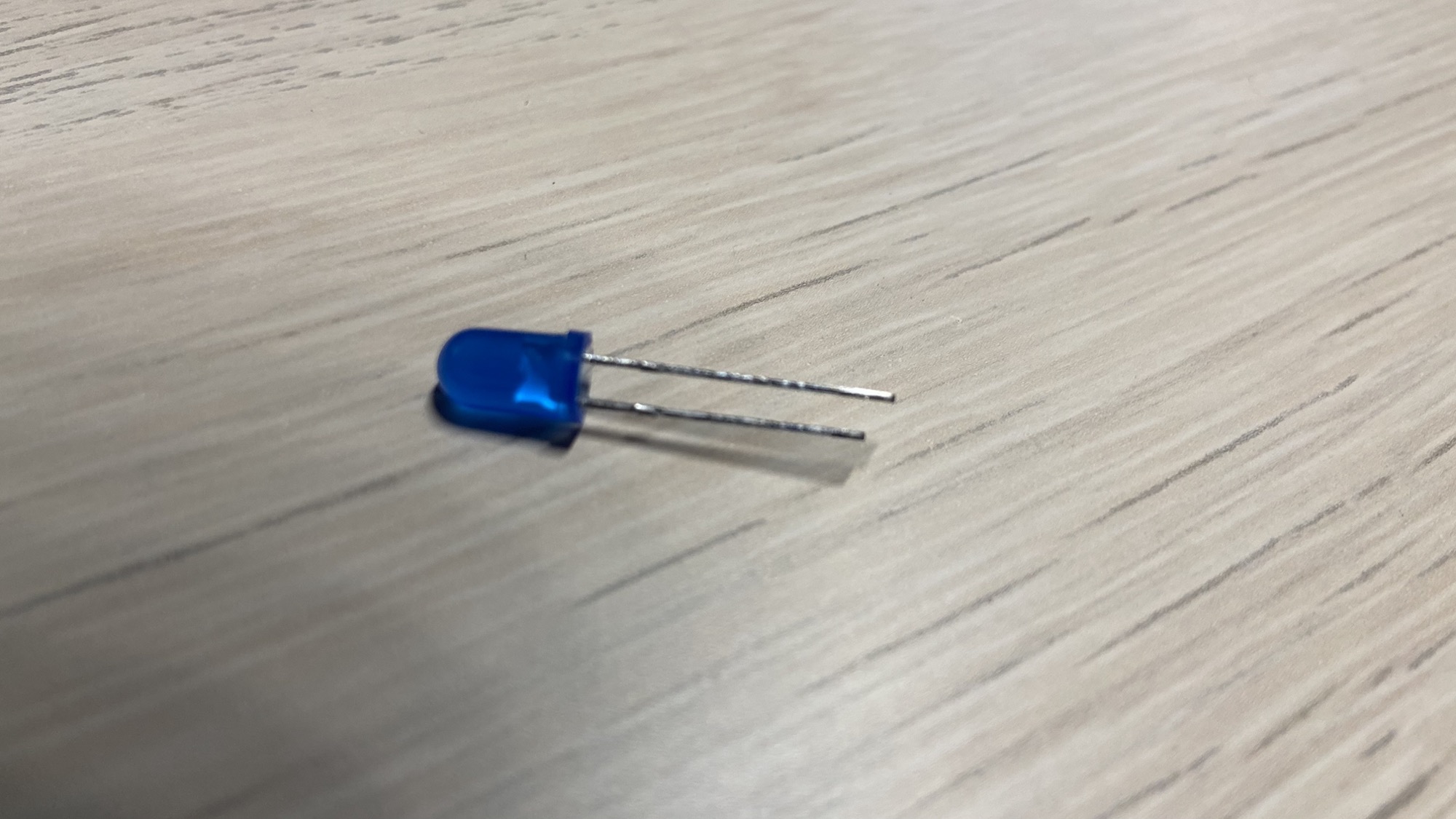
This LED has 2 leads: one is the anode and the other is the cathode.
Typically the anode is longer than the cathode:
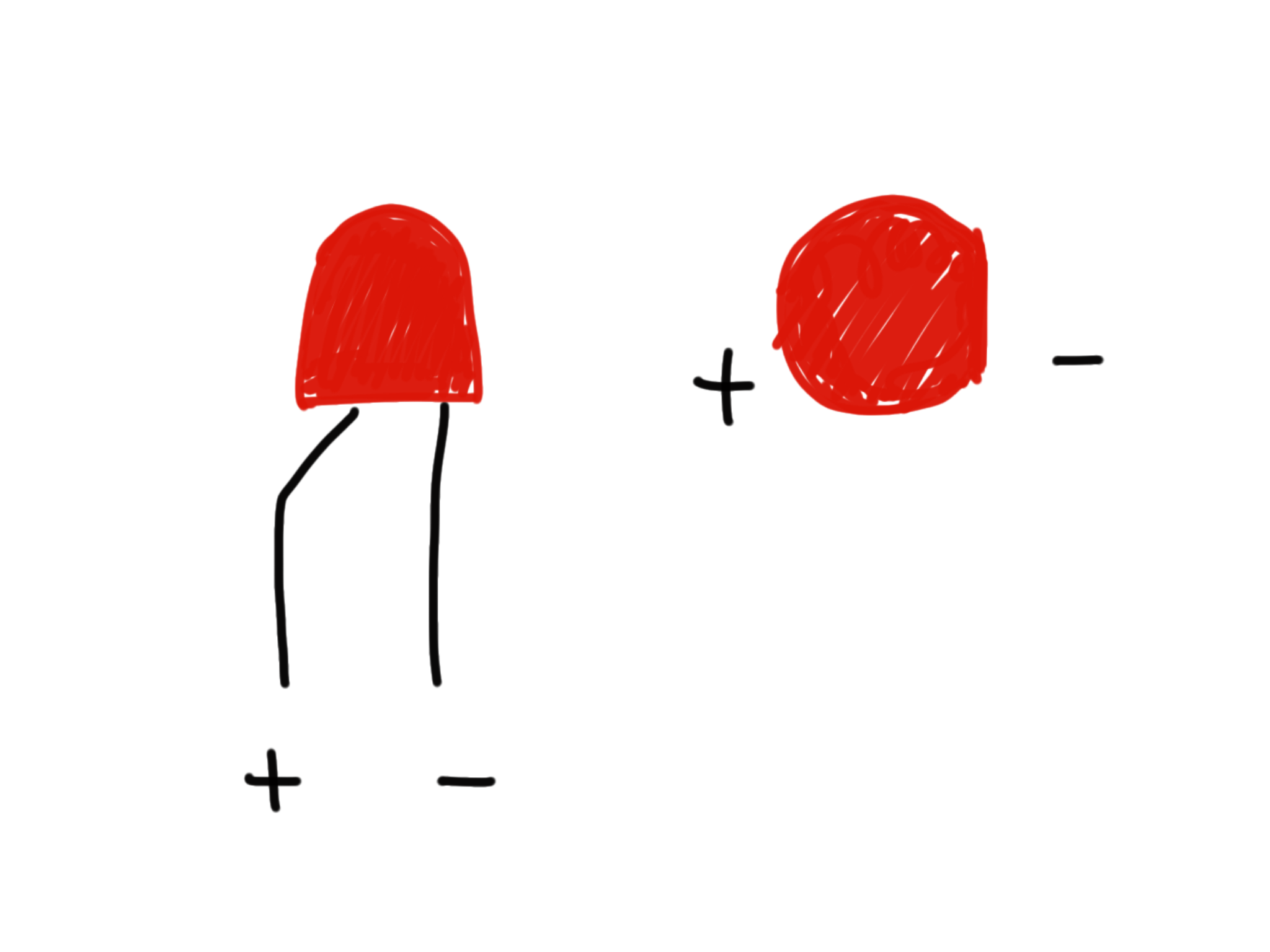
We connect the anode to the + positive lead and the cathode to the -. It’s important to not invert this order, or the LED will not work.
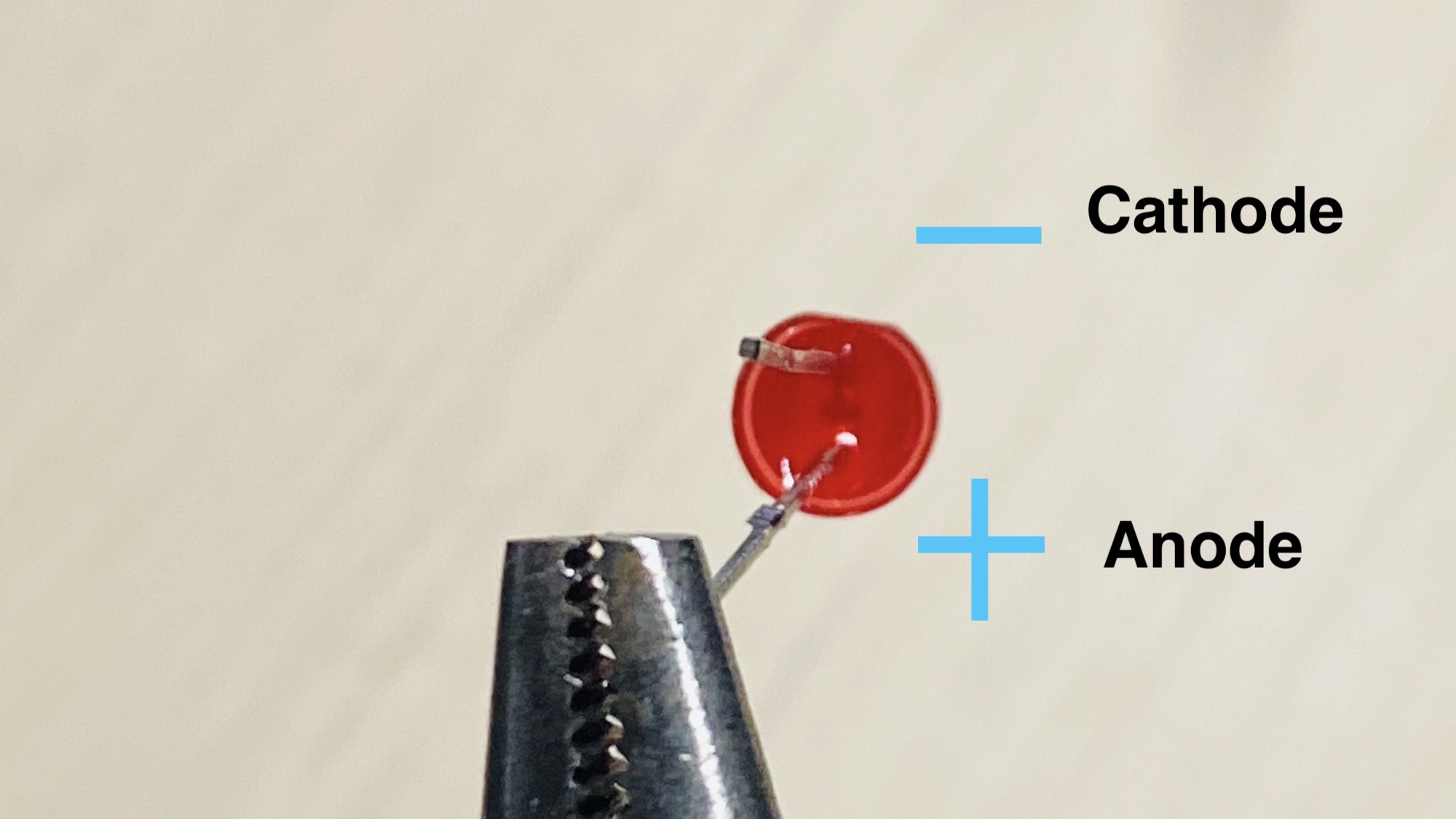
Note that the cathode has a shorter lead, but if the leads are cut it might be hard to figure out which connection is the cathode - in the case of a 5mm LED, the cathode has a little cut through the shape, it’s not a perfect circle like in the side of the anode.
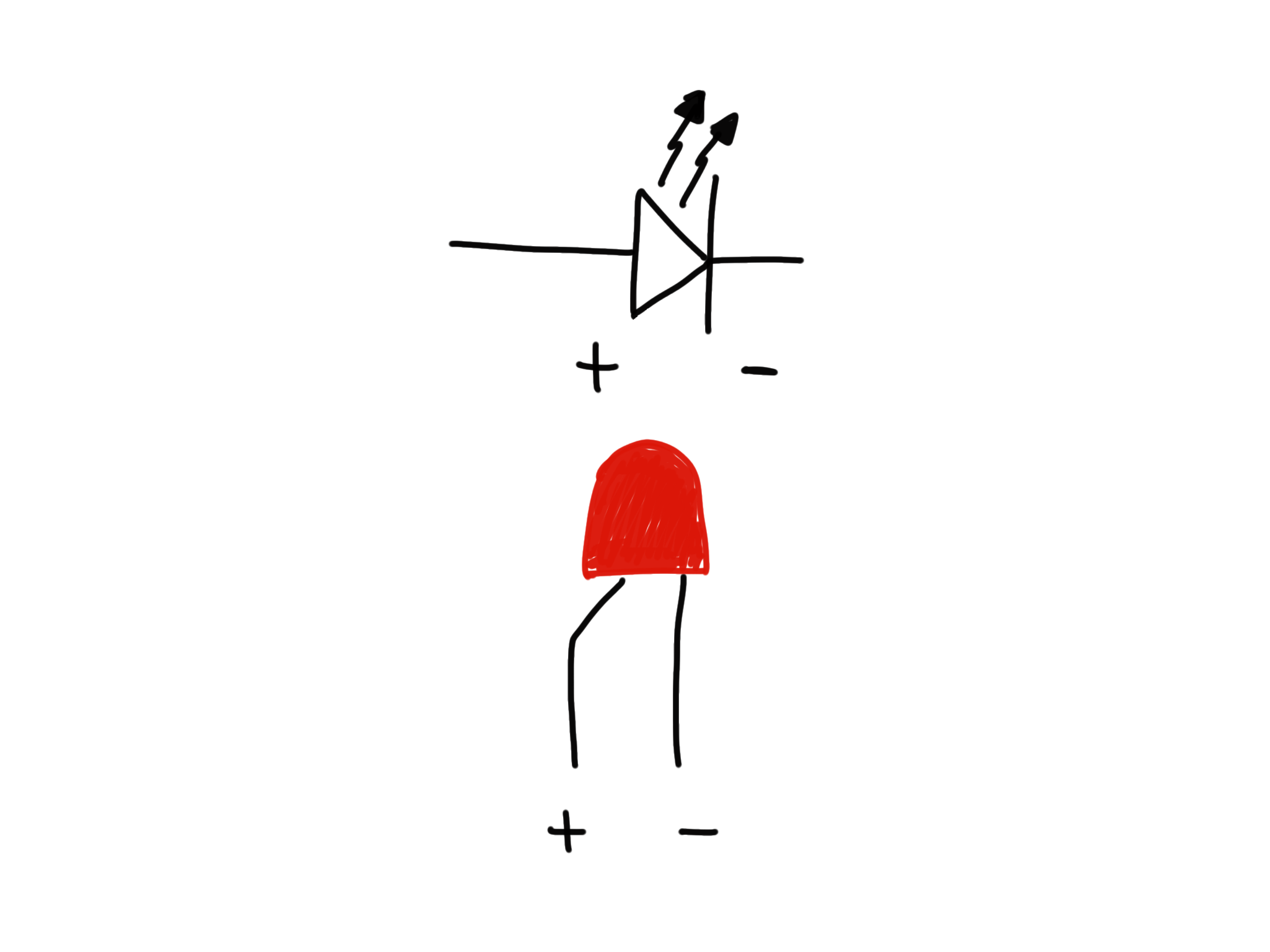
It works exactly like a diode, except it emits light. Here’s how its wires compare to a diode connection:
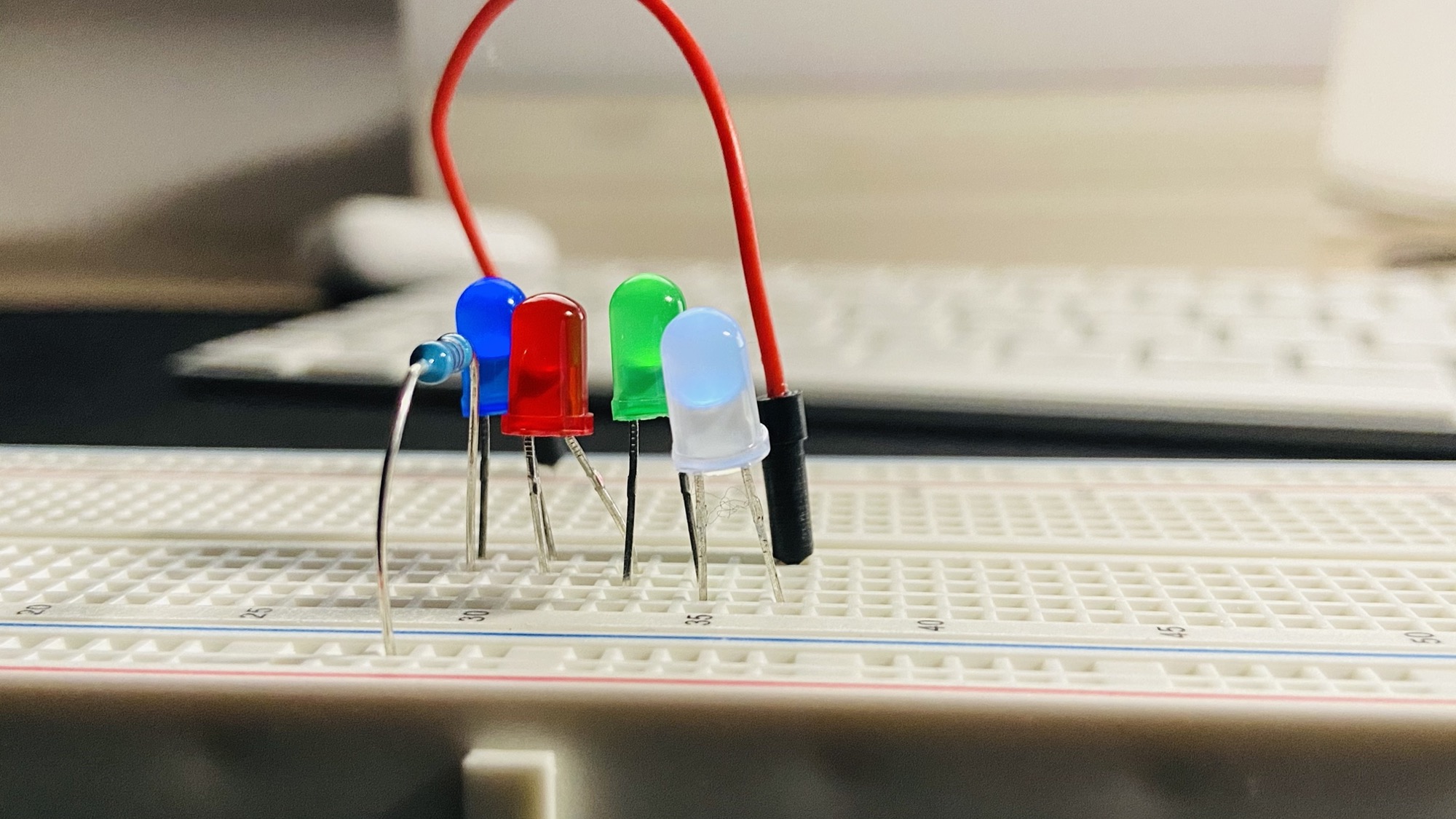
An LED is like a tiny lightbulb, with various color options:
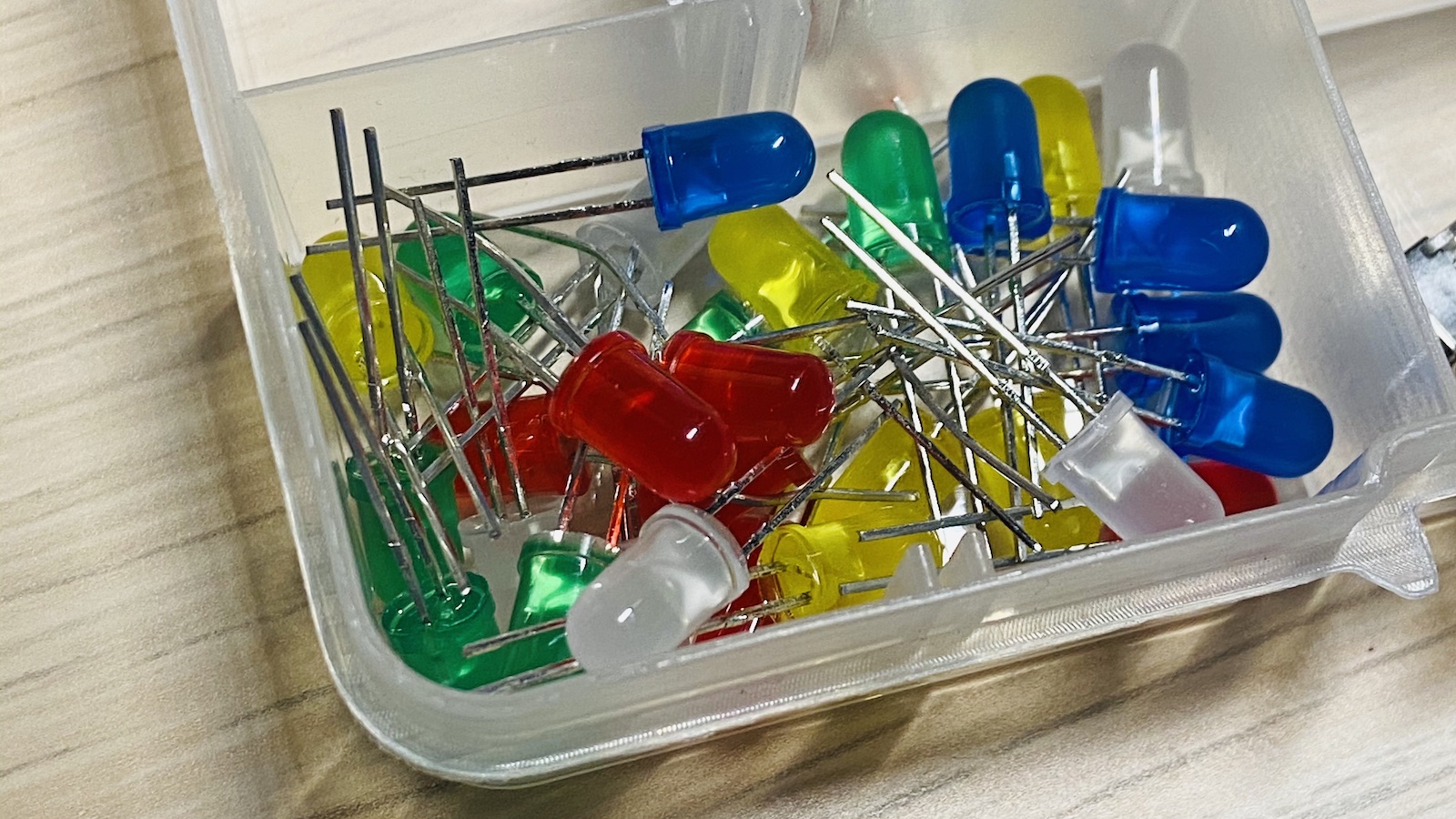
When a certain amount of voltage and current is applied through the wires, the LED will light up. I’m not going to explain how; just know that it’s a reaction of the material they are composed of when current flows through it.
You already saw how to light an LED with the help of a battery and a resistor.
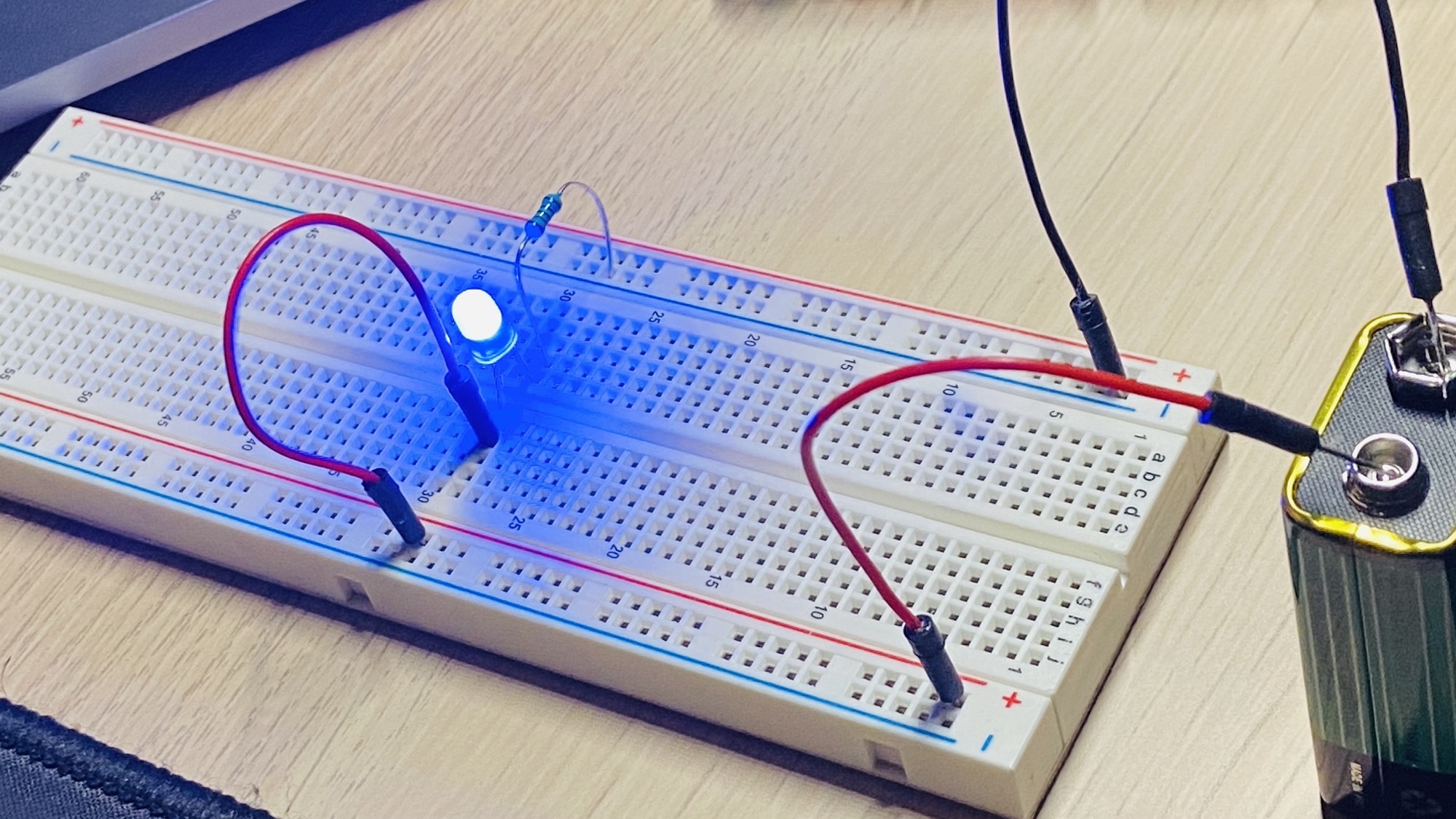
We used a resistor to limit the current flowing through the LED, otherwise it would likely burn because an LED has very low resistance, and the current flowing through the circuit would be too high.
WARNING: with too much voltage or current the LED can also be damaged
With a resistor, everything works as expected.
Depending on the value of the resistor, the voltage drop across the LED will be different.
Here is an example with a 3kΩ resistor. The LED has a voltage drop of 1.87V (the exact value will depend on the LED model). The resistor will limit the current and will have a 7.12V voltage drop:
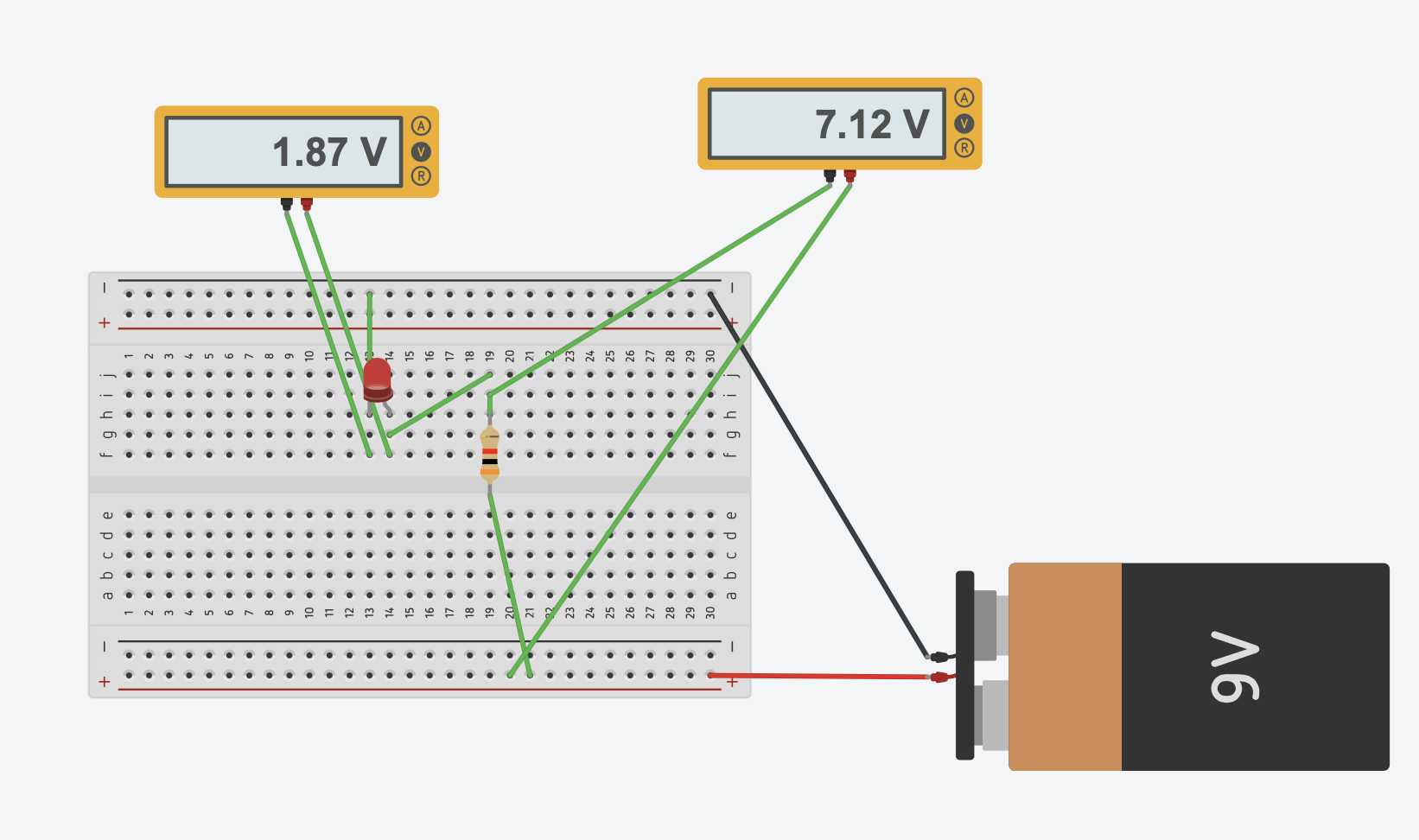
If we had a 300Ω resistor, the voltage drop across the LED would be 2.10V and the current through it would be 22.9mA.
How much current is too much? This is determined by the LED manufacturer, on the specification sheet. The 5mm LEDs I got in the Elegoo box of electronic components point to this datasheet https://www.superbrightleds.com/moreinfo/through-hole/5mm-red-led-15-degree-viewing-angle-5000-mcd/282/1209/ which states the continuous forward current is 50mA, with a peak of 100mA.
If we put 2 LEDs in series, connecting the anode of the second to the cathode of the first, we’ll see they both cause a voltage drop of 1.85V (more or less like before, 1.87V), and the resistor causes a smaller voltage drop compared to before, just 5.29V:
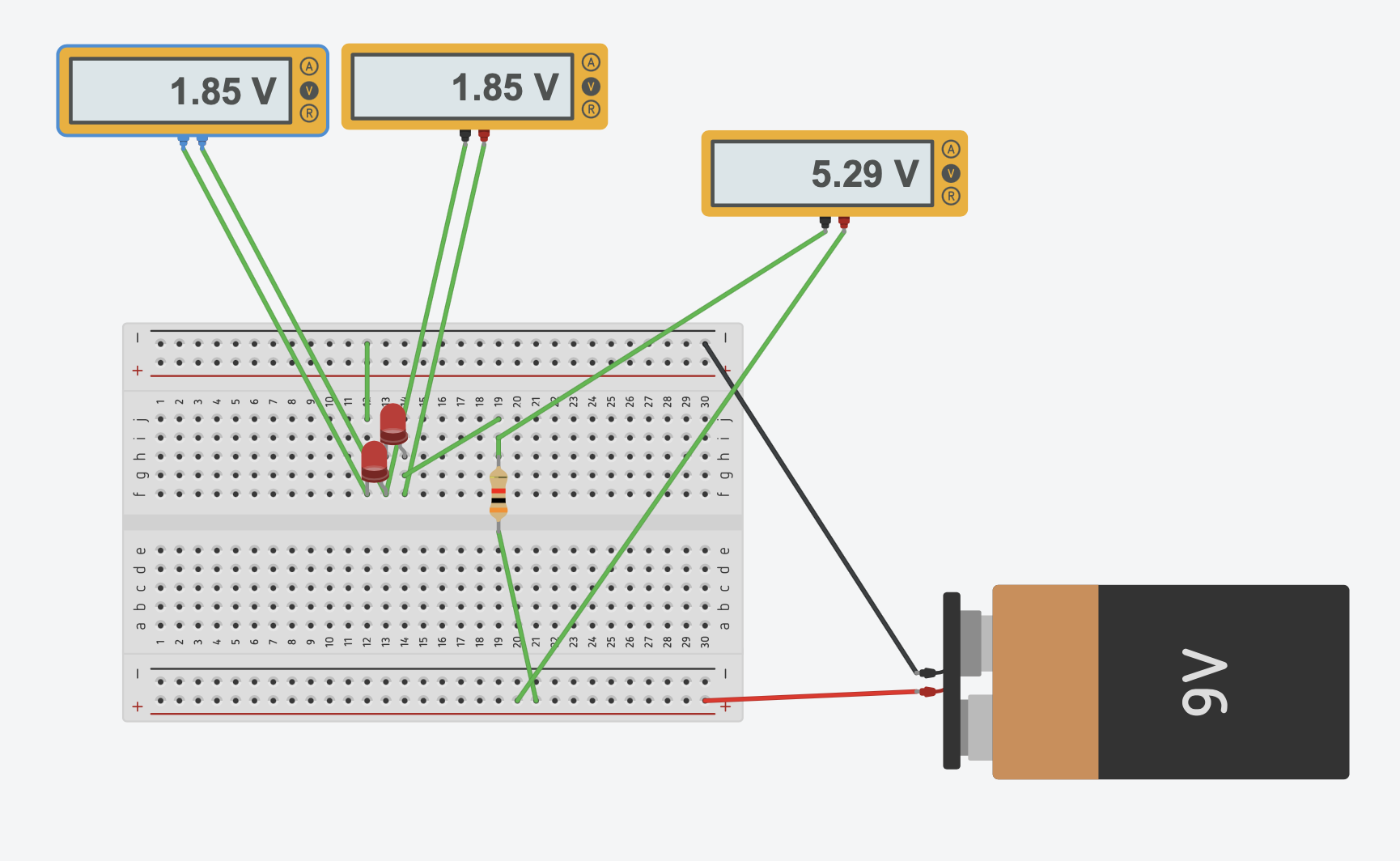
Different LEDs will have different voltage drops, depending also on the color, called nominal forward voltage, and you can get that via direct measurement. It can range from 1.7V up to 4V.
LEDs need a certain amount of current to light up correctly. Typically from 5mA to 30mA.
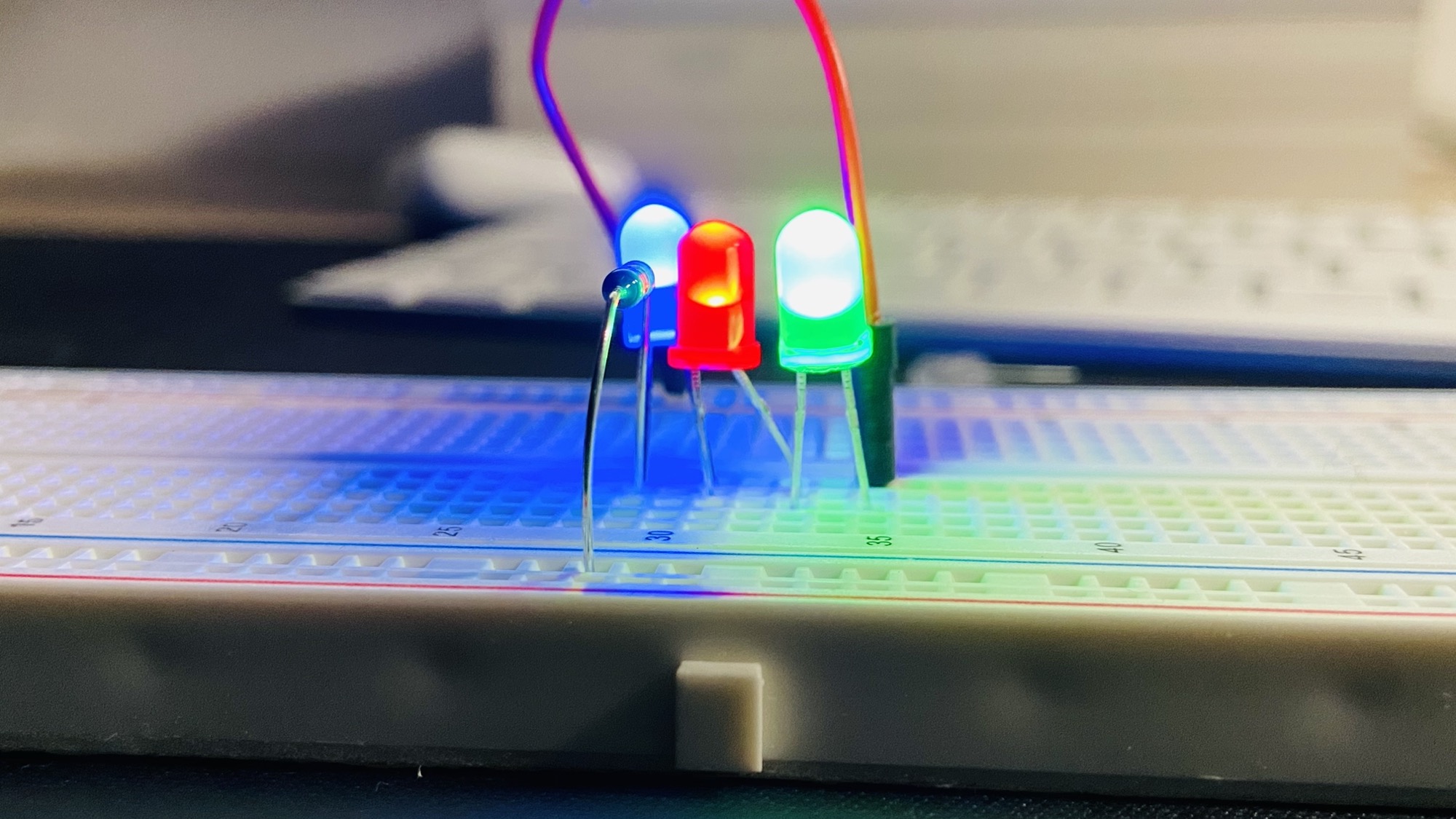
Here are 3 LEDs in series.
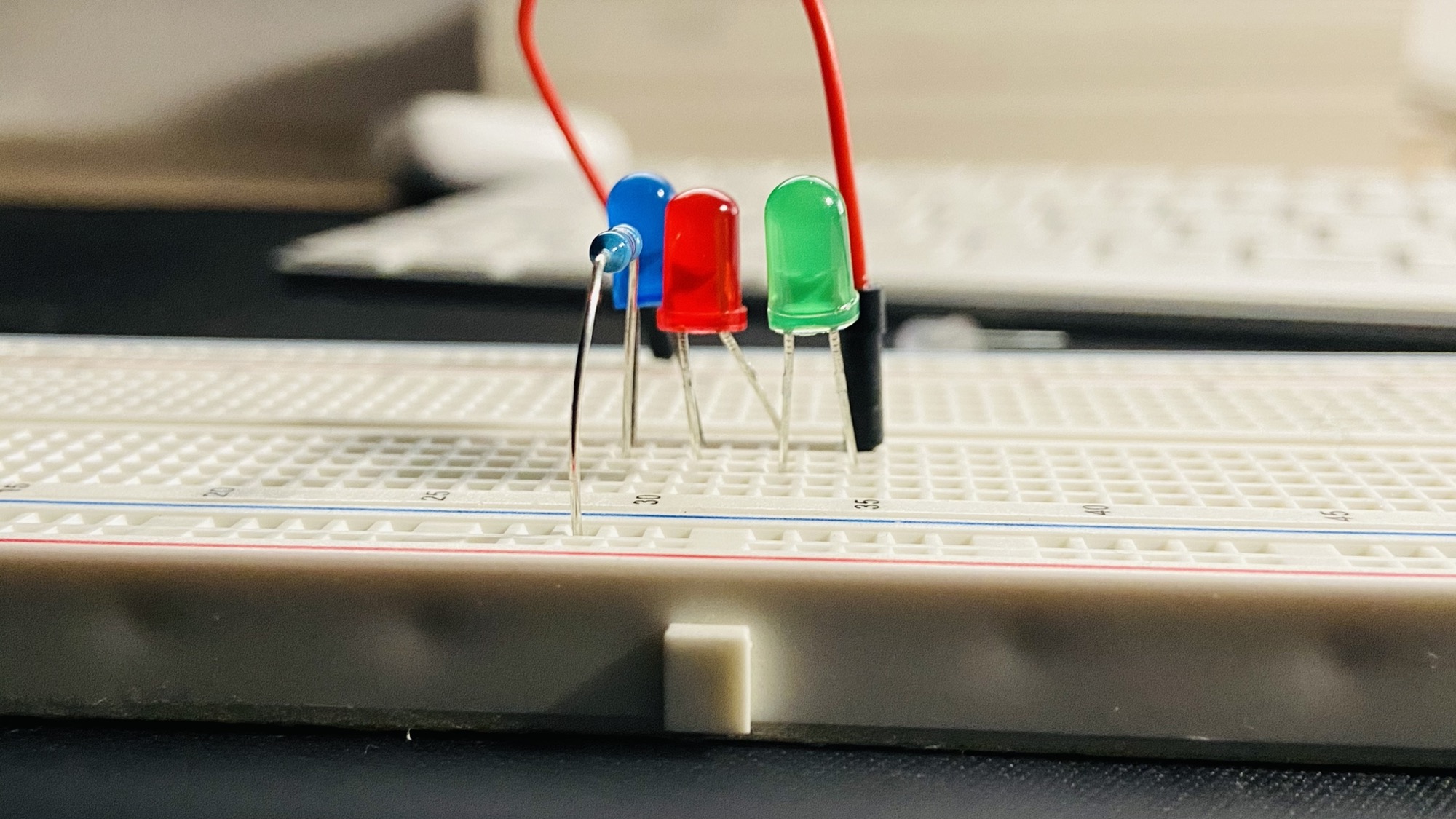
If we apply 9V to the circuit, we’re going to see them shine quite intensely, because the current is 13.3mA:
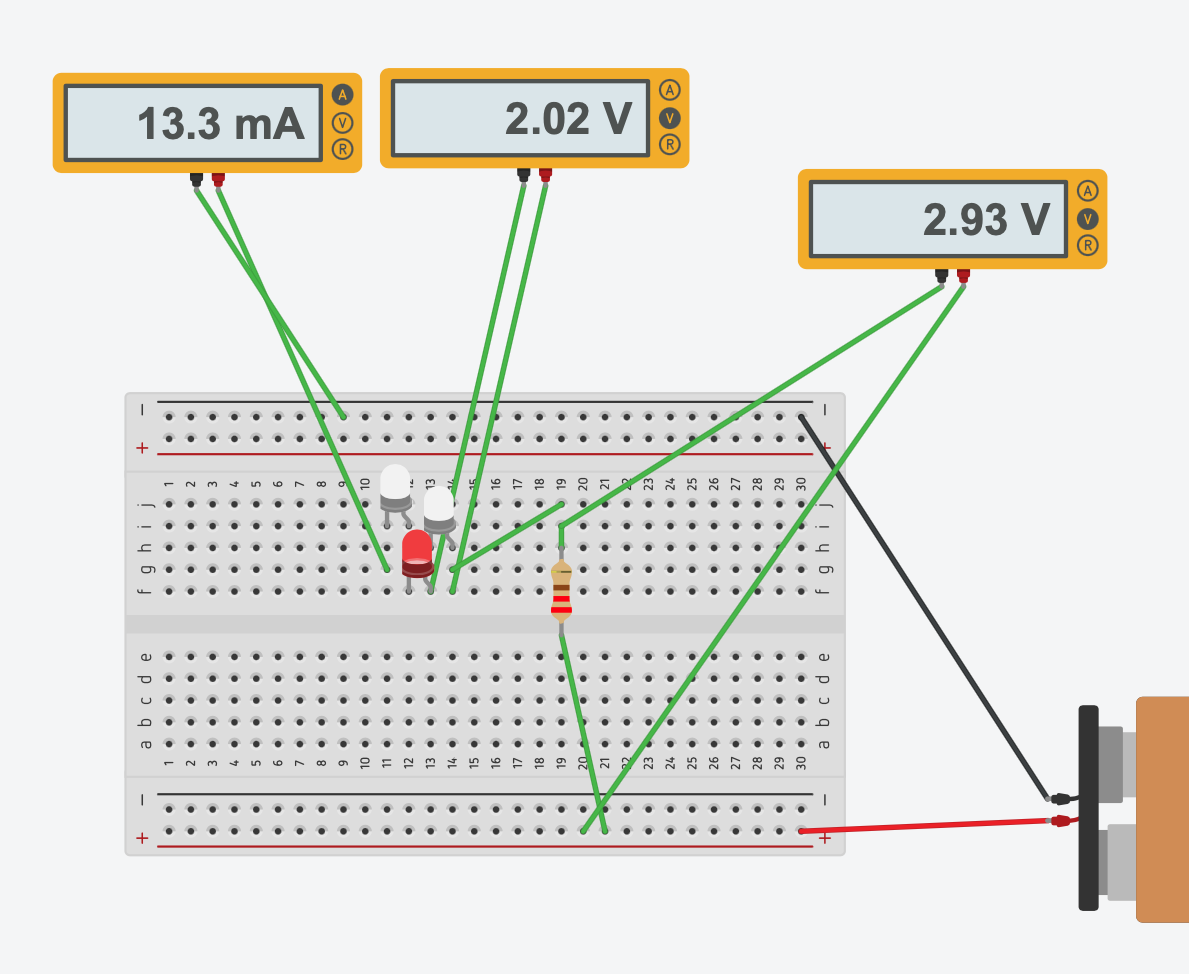
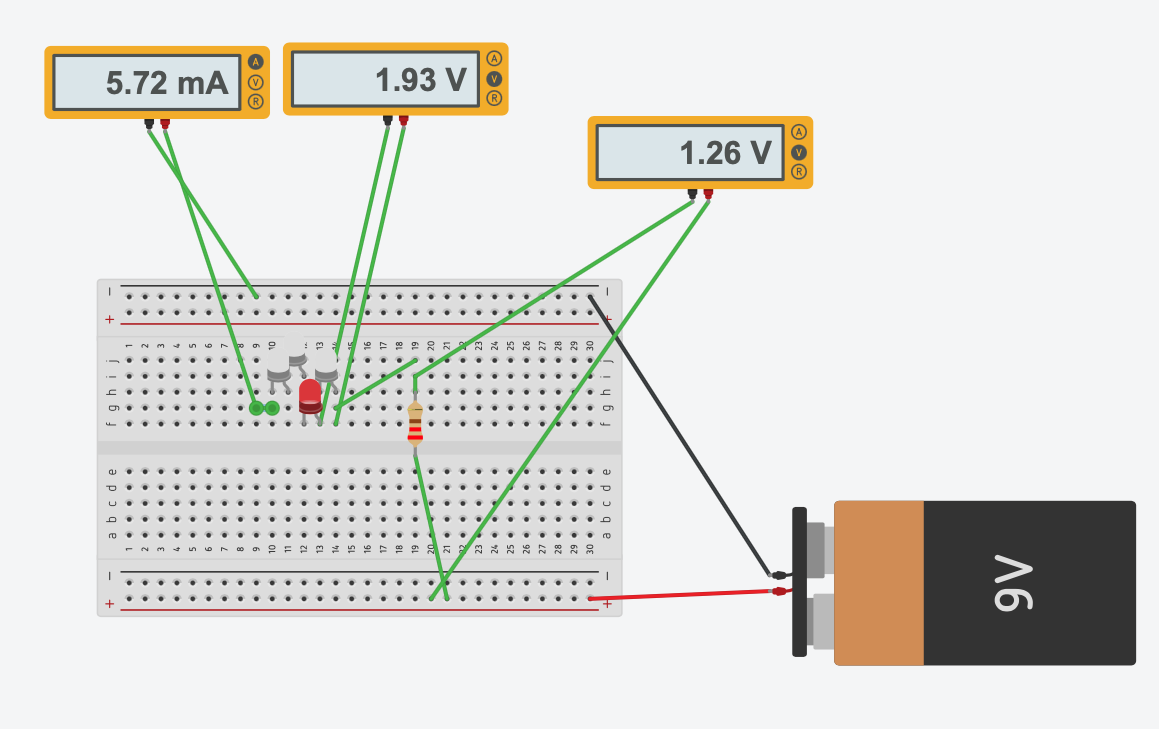
But if we add a fourth LED,
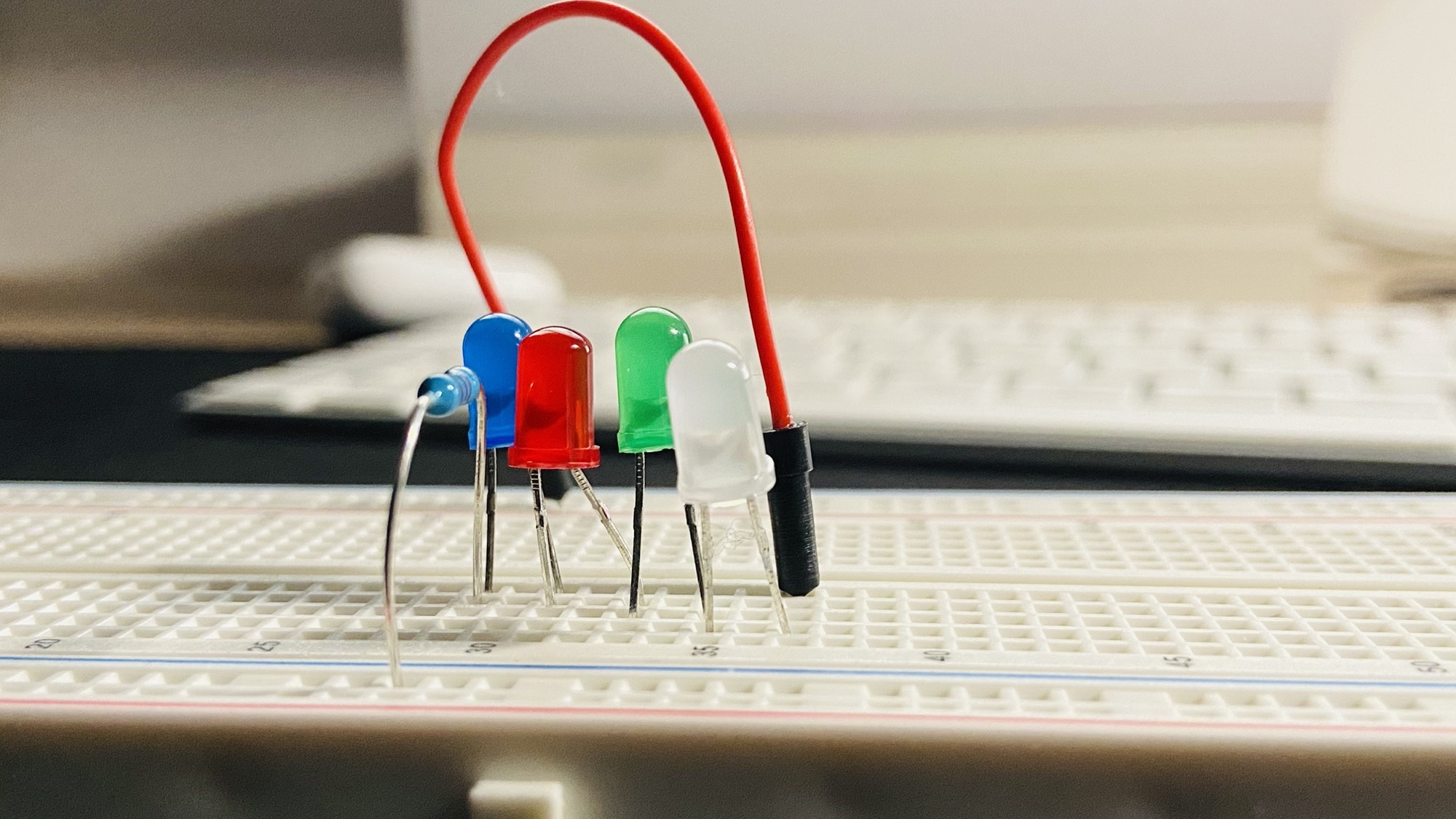
applying the same 9V will cause much less light, because now the current flowing through the circuit is just 5.72mA, not enough to produce a bright light:
Lessons in this unit:
| 0: | Introduction |
| 1: | Breadboard Power Supply Module |
| 2: | Resistors |
| 3: | ▶︎ LEDs |
| 4: | RGB LEDs |
| 5: | Diodes |
| 6: | Buttons |
| 7: | Potentiometers |
| 8: | Buzzers |
| 9: | Servo Motors |
| 10: | Analog Joystick |
| 11: | The DHT11 temperature and humidity sensor |
| 12: | The 1602 LCD Display |