Join the AI Workshop and learn to build real-world apps with AI. A hands-on, practical program to level up your skills.
We talked about Light-Emitting Diodes, diodes that emit light when the current and voltage applied are enough to turn them on. Let’s now talk about diodes in general.
A diode is a tiny component that has one job: make the current flow only in one direction.
This is the symbol for a diode:
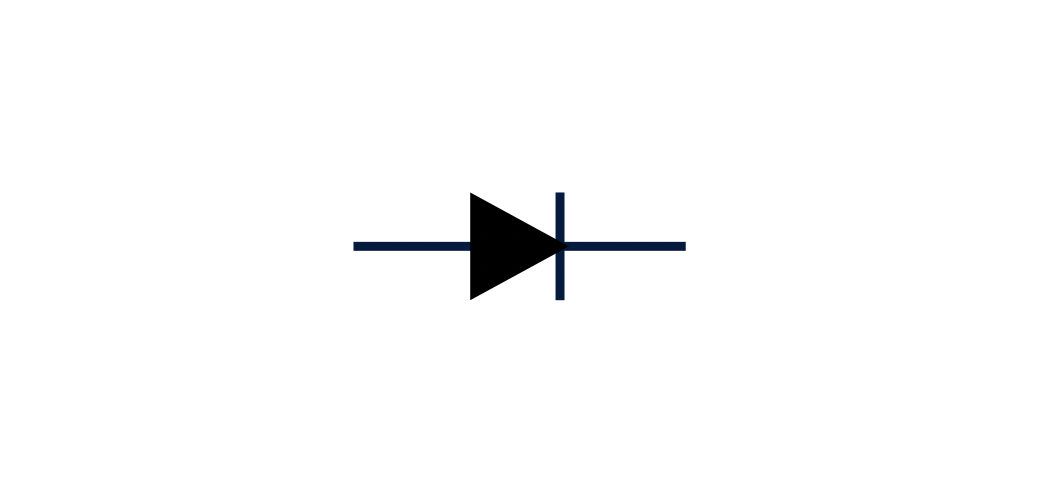
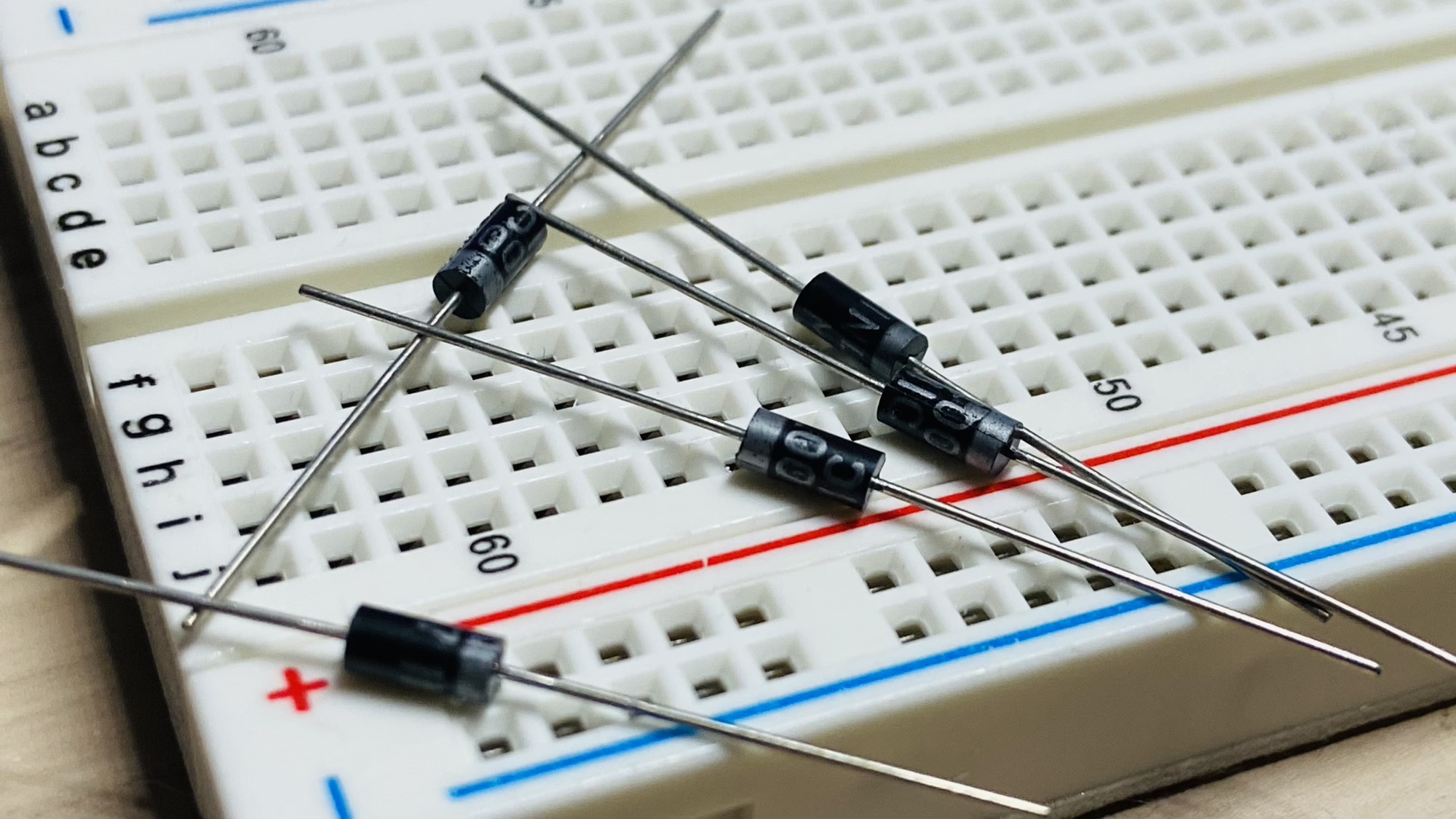
Diodes have a direction. Look at the stripe on the diodes in the picture above. That’s the cathode. It matches the | vertical line in the diode symbol and it indicates the direction the current will flow.
The other side is called anode. Current flows from the anode to the cathode.
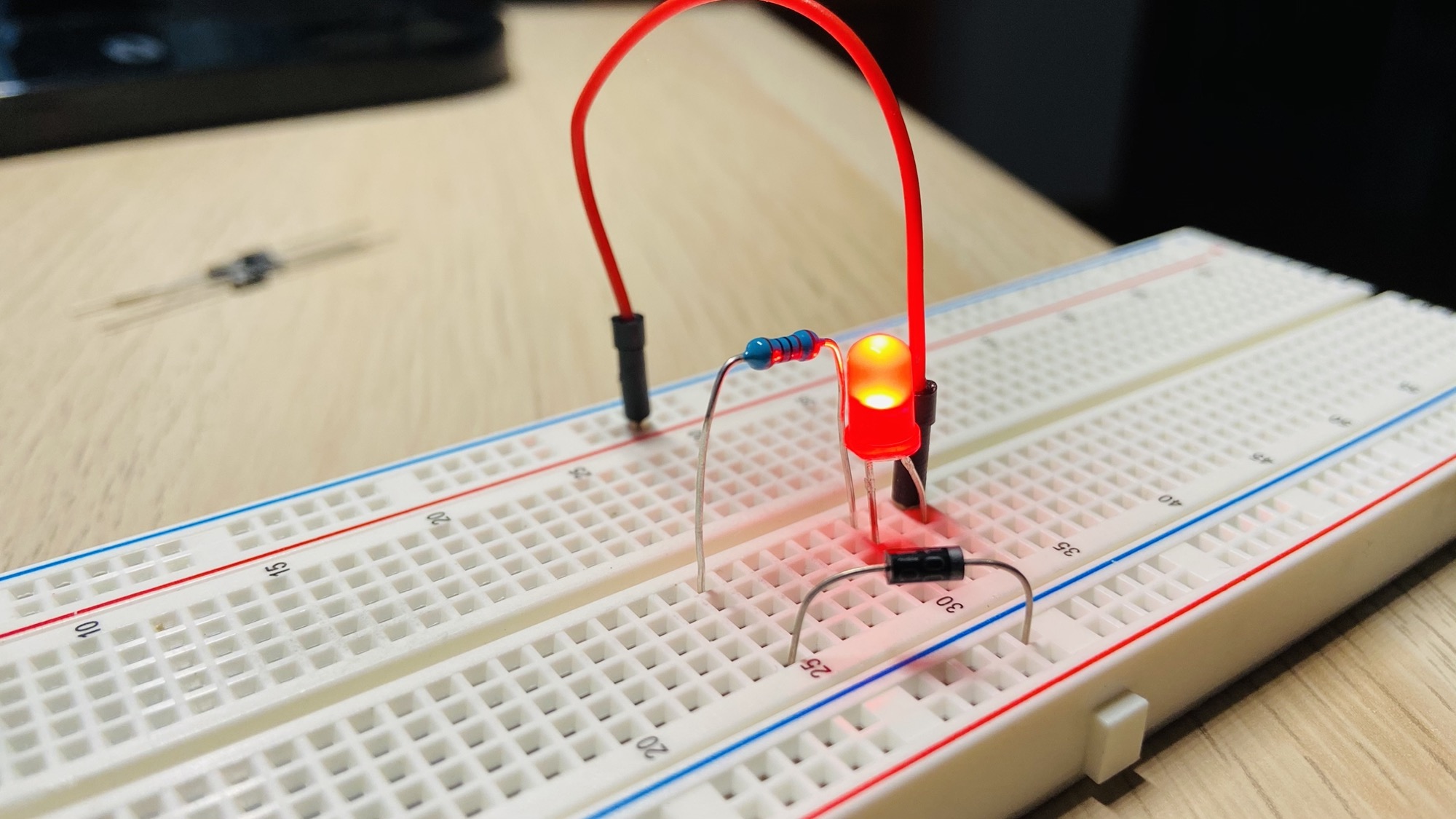
If you add the diode in the correct direction to a simple LED light circuit, the LED will turn on because the circuit is correctly closed:
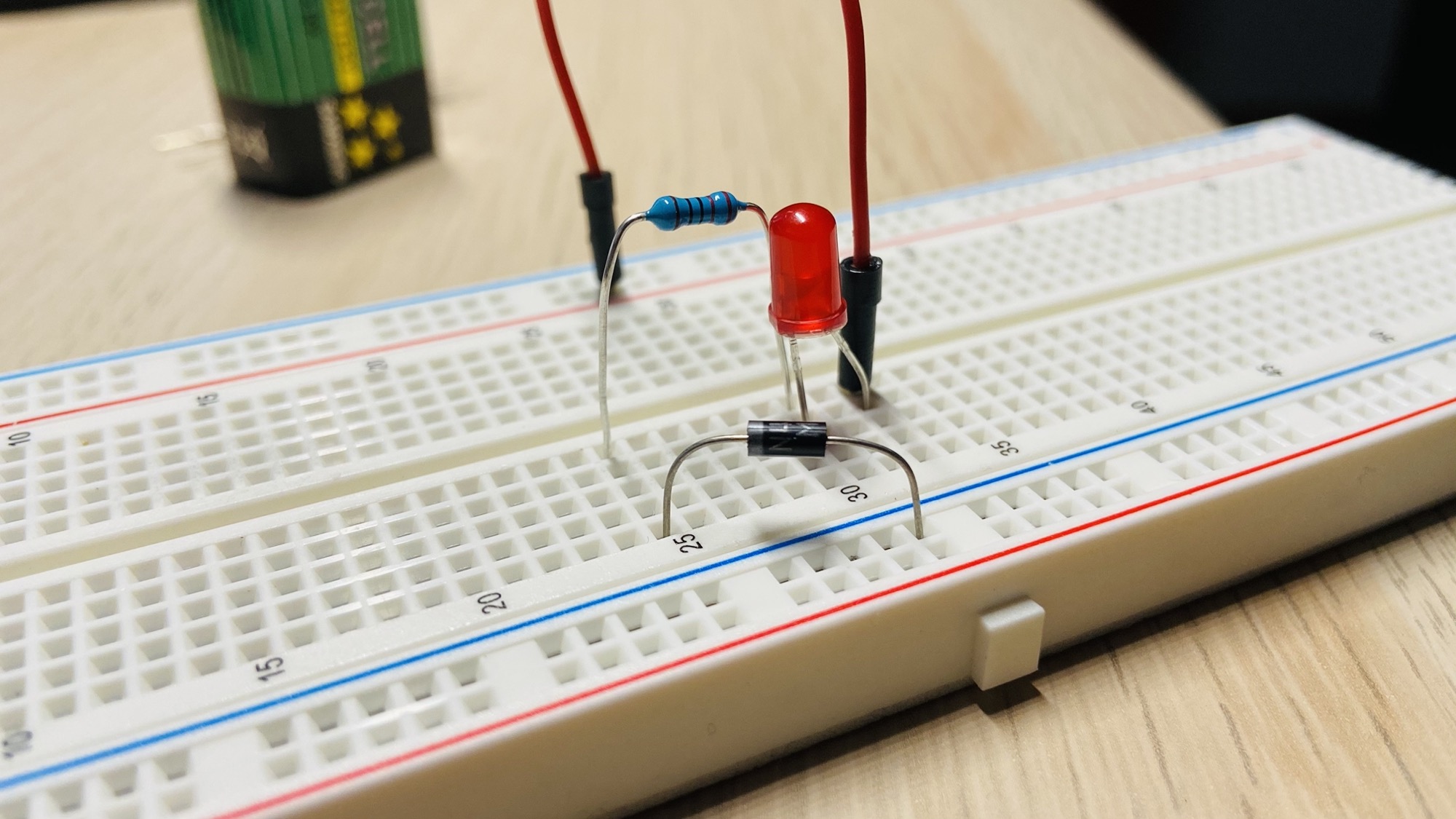
But if you invert the direction, the diode works as an insulator, interrupts the circuit, so the LED does not turn on:
In digital logic, a diode is often used because of this characteristic: it acts as a closed circuit when the correct voltage is applied, and an open circuit when the voltage is reversed. We can build AND and OR logic gates using diodes.
A diode is also very useful to limit current flow, and enables applications like AC-to-DC converters, protecting components from reversed voltage, protecting from voltage spikes, and much more.
The diodes in the picture are 1N4007 diodes, and they can handle a forward current of 1A and a reverse voltage of up to 1000V.
Different kinds of diodes can handle different amounts of current and can withstand different amounts of reverse voltage.
Lessons in this unit:
| 0: | Introduction |
| 1: | Breadboard Power Supply Module |
| 2: | Resistors |
| 3: | LEDs |
| 4: | RGB LEDs |
| 5: | ▶︎ Diodes |
| 6: | Buttons |
| 7: | Potentiometers |
| 8: | Buzzers |
| 9: | Servo Motors |
| 10: | Analog Joystick |
| 11: | The DHT11 temperature and humidity sensor |
| 12: | The 1602 LCD Display |